
Free written scope consultation - allowances, timeline, and change-order rules on paper before a single trade is scheduled
 Before
 After
After Before
 After
After Before
 After
AfterQuikrete Home Additions & ADU: The Pomona Owner’s Guide
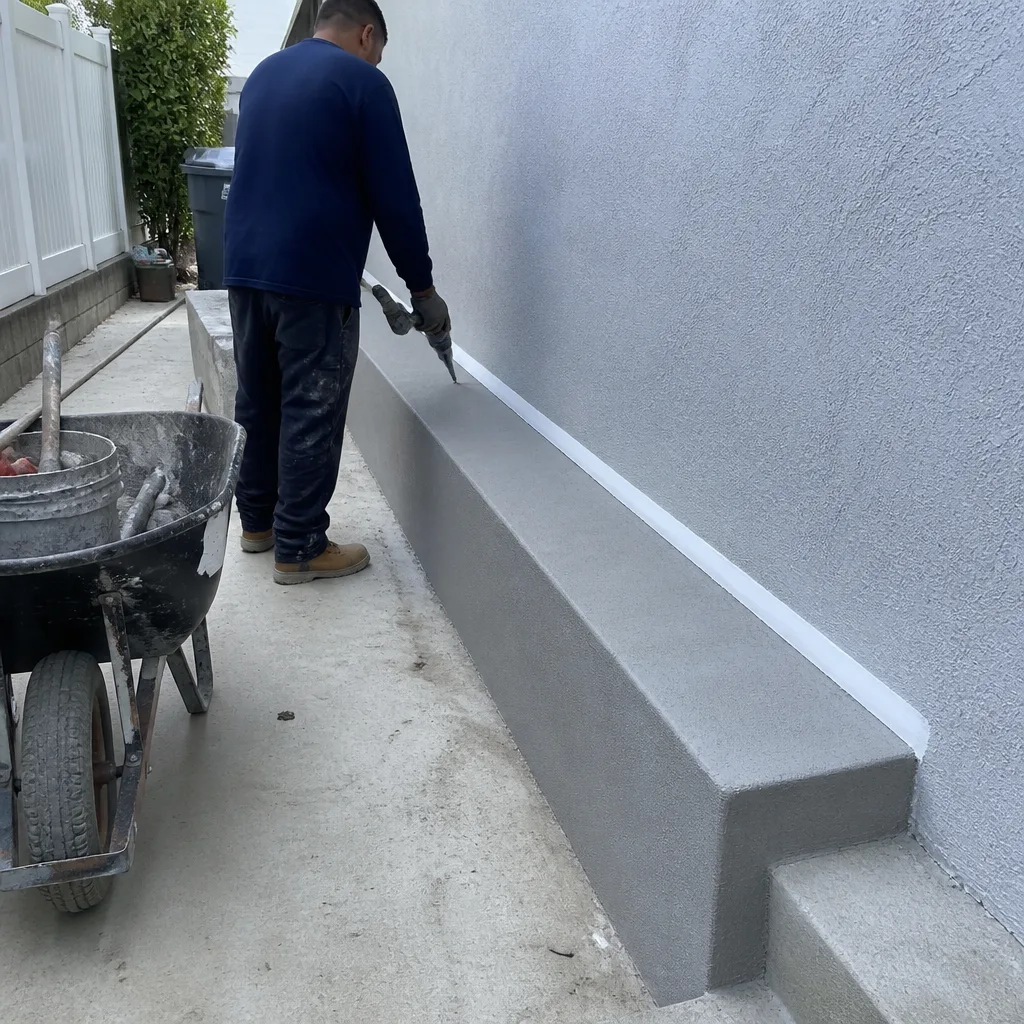
Quikrete concrete and masonry products are common in Pomona home additions and ADU foundations, slab work, and exterior hardscaping, with typical installed projects running $45,000-$130,000 for additions and $90,000-$220,000 for detached ADUs. We stock and install Quikrete-compatible concrete mixes, mortar, and repair compounds for foundation pours, stem walls, and paver base work across Pomona’s Inland Empire climate zone. Most Quikrete material deliveries for active projects can be scheduled within 24-48 hours through our supplier network, and we carry rapid-setting repair products on our trucks for same-day patch work when a pour cracks or spalls during curing.
Homeowners usually discover a Quikrete-related failure when a foundation crack widens after a rainy Pomona winter, when a patio slab starts dusting (surface crumbling) from heat and low humidity, or when an ADU stem wall shows efflorescence - that white mineral bloom that signals moisture moving through the concrete matrix.
Which Quikrete Products This Applies To
Quikrete’s product line for residential construction splits into three categories we specify regularly: concrete mixes (standard 4000 PSI, 5000 PSI, and crack-resistant with synthetic fibers), mortar and stucco base coats for CMU block walls, and repair compounds including vinyl concrete patcher and fast-setting cement for spall repairs. The 80-lb. bags are standard for crew handling; we occasionally spec 60-lb. bags for tight-access ADU sites in older Pomona neighborhoods like Mayfair or Lincoln Park where wheelbarrow runs are tight.
Identification matters because Quikrete’s crack-resistant mix (the one with the synthetic fibers visible in the wet mix) behaves differently in finishing than standard 4000 PSI. The fiber mix can’t be steel-troweled to a glass finish; it will fuzz. We’ve seen DIYers and even some crews in Pomona try to polish it like standard concrete and end up tearing the surface. For stem walls and footings that will be covered, we typically spec standard 4000 PSI with rebar and #4 bar at 18-inch centers. For exposed ADU patio slabs in Pomona’s 100°F-plus summer heat, we spec 5000 PSI with a broom finish and control joints at 8-foot spacing, not 10, because the thermal expansion here is real.
OEM Quikrete versus aftermarket: for bagged mixes, there is no meaningful aftermarket - Quikrete dominates the retail channel and our supplier delivers it direct. For repair compounds, we stock Quikrete vinyl concrete patcher as our primary because it bonds to damp substrates, which matters in Pomona’s occasional winter rains when we’re doing emergency spall repairs. Some competitors spec generic patch products; we’ve found the bond strength spec on Quikrete’s SDS holds up better under our pull-test verification.
Signs Your Quikrete Concrete Work Is Failing
- Map cracking or crazing on the surface. This fine network of shallow cracks usually means the slab was finished while bleed water was still rising, or it cured too fast in Pomona’s dry heat. The concrete is structurally sound but the surface will dust and wear prematurely. We grind and apply a Quikrete resurfacer when the pattern is widespread.
- Corner spalling or pop-outs. Small chunks breaking off at edges or where aggregate is exposed. In Pomona, this often traces to freeze-thaw cycles - rare but real in January dips - or to salt exposure from pool equipment or de-icing on adjacent hardscape. We cut back to sound concrete and patch with vinyl concrete patcher.
- Efflorescence - white powdery deposits. Soluble salts migrating through the capillary structure. On ADU stem walls in Pomona’s clay-heavy soils near Ganesha Hills, this signals moisture intrusion from inadequate drainage or missing damp-proofing. We address the water source first; patching over it is pointless.
- Settlement cracks - diagonal or stair-step patterns. These run through the concrete, not just across the surface. In Pomona’s variable soils, from the compacted alluvium near the 10 Freeway to the expansive clays north of Holt Avenue, differential settlement is the usual cause. We epoxy-inject structural cracks and install pier support when the drop exceeds 1/2 inch.
- Dusting - surface turns to powder under foot traffic or broom sweeping. Weak surface paste, usually from over-wetting the mix, finishing with bleed water, or inadequate curing in Pomona’s low-humidity summers. We densify with lithium silicate or grind and resurface depending on depth.
 Before
 After
AfterReplacement Cost & What’s Included
Quikrete repair and replacement work in Pomona falls into three tiers: surface repairs ($800-$2,500), partial slab or wall section replacement ($3,500-$12,000), and full foundation or ADU slab work as part of larger projects ($45,000-$130,000 for home additions, $90,000-$220,000 for detached ADUs). The table below shows typical line-item ranges for concrete-specific work we quote in writing before starting.
| Scope | Price Range (Pomona) | What’s Included |
|---|---|---|
| Concrete slab resurfacing (Quikrete resurfacer) | $800-$2,500 | Grind prep, primer, 1/8″-1/4″ resurfacer coat, broom finish |
| Spall / pop-out repair (up to 10 sq. ft.) | $400-$1,200 | Cut to sound concrete, patch with vinyl concrete patcher, match texture |
| Foundation crack injection (epoxy) | $600-$1,800 | Clean rout, epoxy injection, surface seal, documentation photo set |
| Partial slab replacement (up to 100 sq. ft.) | $3,500-$8,500 | Demo, form, rebar, Quikrete 4000 PSI pour, finish, 28-day cure monitoring |
| ADU foundation (new, typical 400 sq. ft.) | $12,000-$28,000 | Excavation, forms, rebar/mat, Quikrete 3000-4000 PSI, damp-proofing, backfill |
| Full home addition foundation + slab | $18,000-$45,000 | Engineered plans, permit pull, inspection scheduling, full documented build |
What drives the range: access (tight Pomona lots require pump trucks or power buggies at $300-$800/day), soil condition (expansive clay needs over-excavation and import fill), and finish spec (broom versus stamped versus exposed aggregate). Under Clause 1 of the Haven Standard, the written price you sign includes all of the above that applies to your job - no surprise line items when the truck shows up. Our 365-Day Done Right Promise covers the workmanship; material defects go to Quikrete’s published warranty.
DIY or Call Us?
There’s honest work a Pomona homeowner can do: sweep out loose debris from a small spall, wet the edge so patch material doesn’t suck the water out, and trowel in Quikrete vinyl concrete patcher per the bag instructions. Measure the depth first - patches over 2 inches need to be built up in lifts, or they’ll shrink-crack. We’ve seen plenty of 3-inch DIY patches fail in six months because someone tried to do it in one go.
Where DIY goes wrong fast: foundation cracks that need epoxy injection. The pumps run 2,000+ PSI to force resin into a hairline crack. Misjudging the back-pressure blows out the surface seal and sprays epoxy across the wall - it’s not coming off. Settlement cracks with vertical displacement mean the slab is moving; patching without addressing the soil or drainage is throwing money into a hole that keeps growing. And any concrete work that requires a permit in Pomona - which means any ADU foundation, any structural slab, any work over 200 square feet - needs engineered plans, inspection scheduling, and a licensed contractor pulling the permit.
We’re not affiliated with Quikrete; we’re independent contractors who specify their products when the job calls for them. If you’re staring at a crack and wondering whether it’s cosmetic or structural, call (626) 606-1081. We’ll look at the photo you text us and tell you straight whether it’s a bag-and-trowel Saturday or a call-the-crew situation. Measure twice, then we can talk.
FAQs
How long should Quikrete concrete last in Pomona’s climate?
Properly mixed, placed, and cured Quikrete concrete should last 50+ years in Pomona’s dry-warm climate, though surface wear from UV and thermal cycling shows at 15-25 years on exposed flatwork. We see premature failure at 5-10 years when the water-to-cement ratio was too high, curing was skipped in summer heat, or control joints were spaced too wide for the slab dimensions. Call (626) 606-1081 for an exact quote on your repair - estimates are free.
Can a cracked Quikrete slab be repaired, or does it need full replacement?
Hairline cracks without vertical displacement can be epoxy-injected or surface-sealed; slabs with settlement over 1/2 inch, widespread map cracking, or structural rebar exposure need partial or full replacement. We test with a hammer sounding survey to find hollow areas, then quote both options in writing. Call (626) 606-1081 for an exact quote - estimates are free.
How long does a Quikrete slab replacement take?
Demo and forming: 1-2 days. Rebar and inspection: 1 day. Pour and finish: 1 day. Initial cure (foot traffic): 48 hours. Full structural load: 28 days. We schedule Pomona inspections around the city’s availability, which typically adds 2-3 business days total. Call (626) 606-1081 for an exact quote - estimates are free.
Do you stock Quikrete products on your trucks?
We carry vinyl concrete patcher, fast-setting cement, and resurfacer compound for same-day repairs. Bagged concrete mix for pours comes direct from our supplier with next-day delivery to Pomona job sites - we don’t haul 80-lb. bags on trucks when a boom pump or line pump is more efficient for volume work. Call (626) 606-1081 for an exact quote - estimates are free.
Written by Grant Rowan, Owner, Rowan Construction Group Pomona at Rowan Construction Group Pomona, serving Pomona and nearby areas.