
Last updated September 24, 2026
Free written scope consultation - allowances, timeline, and change-order rules on paper before a single trade is scheduled
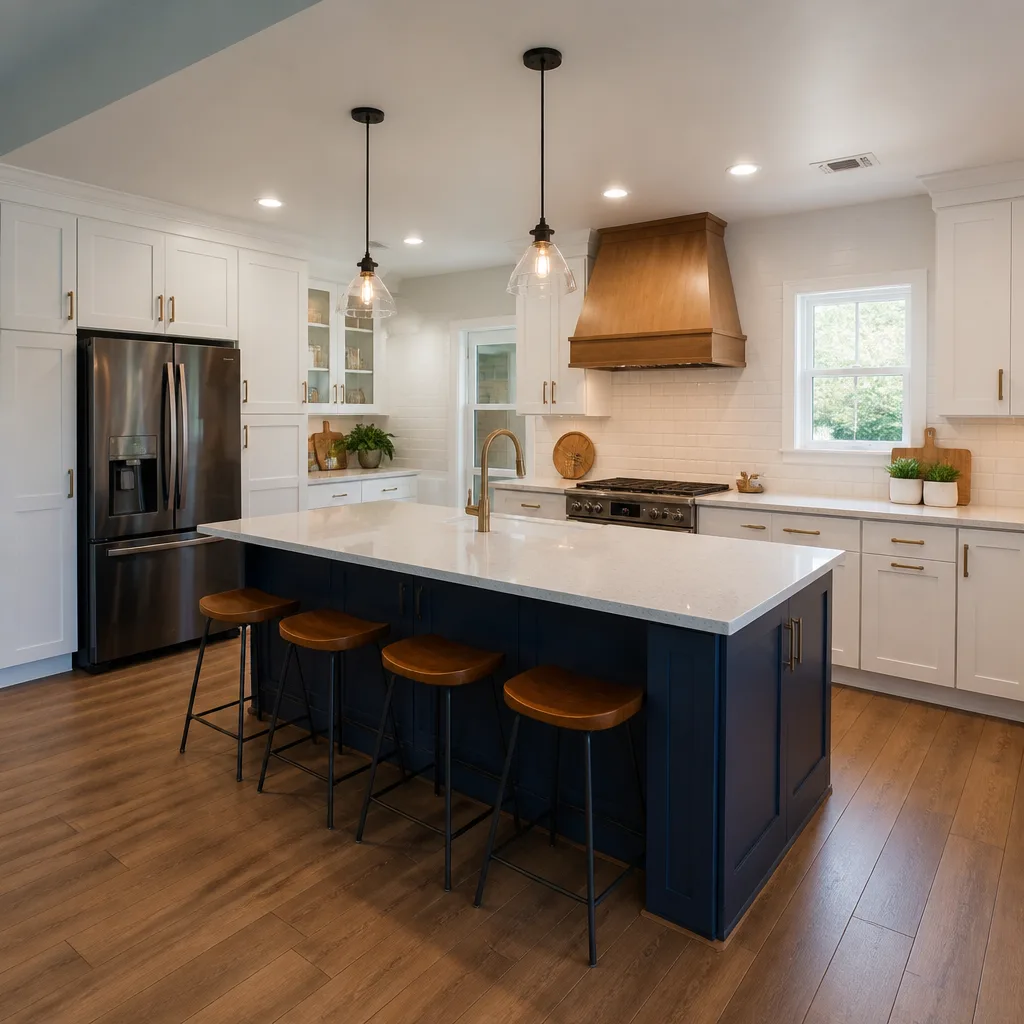
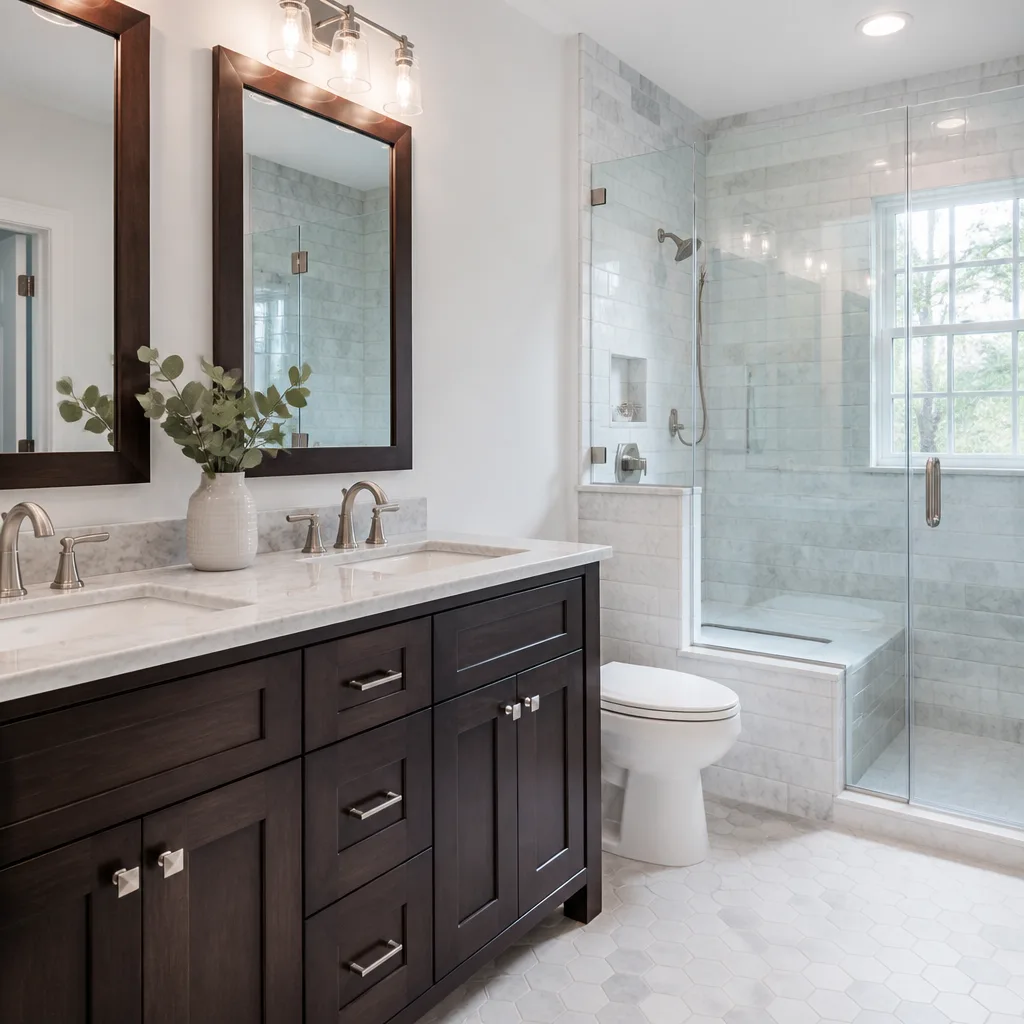





 Before
 After
After Before
 After
After Before
 After
AfterKitchen Remodeling Maintenance Checklist for Pomona Homeowners
Cabinet hinges rated for 80,000 open-close cycles sound durable until you calculate that a family of four reaches that number in under seven years. Most hinge failures begin showing stress at cycle 60,000, well before visible failure - and that’s when the door starts sagging, not when it falls off. In Pomona, where Santa Ana wind events pressurize homes and dry fall air shrinks wood components, the gap between “looks fine” and “needs repair” narrows faster than most homeowners expect. This guide organizes maintenance by elapsed time after your Kitchen Remodeling services completion - 30, 60, 90 days, then six months, one year, and two years - because that’s how kitchens actually wear, not by the arbitrary seasons on a calendar.
Quick Answer
A proper kitchen remodel maintenance program for Pomona homeowners includes grout moisture testing at 30 days, cabinet alignment checks at 60 days, and ventilation filter replacement tied to actual cooking hours - not generic quarterly schedules. For Seasonal Construction Care for Pomona: Year-Round Homeowner’s Guide, see our companion resource. The first 24 months after installation are when grout failures, cabinet hinge fatigue, and ventilation deficiencies reveal themselves, and Pomona’s dry summers (often sub-30% humidity) and Santa Ana wind events accelerate several of those failure modes. Document every maintenance action with dates and photos; warranty claims get denied on technicalities, not product defects.
Table of Contents
- The Critical First 90 Days: Grout, Cabinets, and Appliance Calibration
- How Pomona’s Climate Affects Your New Kitchen
- Ventilation Hood Maintenance Based on Real Cooking Frequency
- Warranty Documentation: Where to File What, and When
- Year-One Maintenance Tasks That Protect Your Investment
- The 24-Month Inspection: What Reveals Itself Now
- Common Mistakes to Avoid
- When to Call a Professional
- Frequently Asked Questions
 Before
 After
AfterThe Critical First 90 Days: Grout, Cabinets, and Appliance Calibration
Most contractors hand over keys and disappear. The 30-60-90 day window is when installation stresses reveal themselves, and catching them early separates a kitchen that lasts 15 years from one that shows wear in five.
Day 30: Grout and Sealant Curing
Portland cement-based grout reaches 90% of its final strength in 28 days, but full curing takes longer in arid conditions. Pomona’s September and October humidity often drops below 30%, which accelerates surface drying while leaving internal moisture trapped. This creates a weak layer cake: hard on top, soft inside.
- Test grout hardness with a fingernail in an inconspicuous corner. It should not scratch.
- Inspect all silicone sealant joints - sink to countertop, countertop to backsplash, range to surrounding material. Look for shrinkage gaps or separation from either surface.
- Run water along backsplash grout lines for 30 seconds. Check the reverse side of any plumbing walls for moisture if accessible.
- Photograph every joint condition. Date the photos. This is your baseline.
If grout crumbles or sealant pulls away, this is a warranty issue. Do not attempt to patch it yourself; manufacturer warranties on Kitchen Remodeling in Pomona installations require documentation of the original condition by the installing contractor.
Day 60: Cabinet Alignment and Hardware Stress
Wood cabinets continue adjusting to your home’s environment for 6-8 weeks after installation. In Pomona, where indoor humidity can swing from 45% in winter to 25% in summer, door gaps that looked even in March may tighten or loosen by May.
- Check all door and drawer reveals (the gap between adjacent doors) with a consistent measurement - a nickel’s width is a common standard. Record the measurement at top, middle, and bottom of each pair.
- Listen for hinge clicking or catching during the first 10% of opening travel. This indicates misalignment loading the hinge barrel.
- Test soft-close mechanisms. A drawer that no longer soft-closes is not a convenience failure; it’s a sign the slide geometry has shifted.
- Verify that all adjustable shelf pins are seated fully. Pins working loose in the first 60 days suggest either incorrect hole depth or material compression.
Day 90: Appliance Calibration and Ventilation Verification
Appliances installed in new cabinetry settle differently than in old. The 90-day mark is when to verify that settlement hasn’t affected performance.
- Check refrigerator door seal contact with a dollar bill - it should drag evenly at all points. New cabinetry can tilt refrigerators fractions of an inch.
- Verify dishwasher drain loop height. Installation manuals specify 32 inches minimum above floor; settling cabinets can lower this.
- Test range burner flame color. Blue with minimal yellow indicates proper gas pressure and orifice condition. Orange tipping suggests lint or debris from construction dust.
- Measure actual ventilation hood airflow at the intake with a simple anemometer (available for $25). Compare to the manufacturer’s specified CFM. A reading below 80% of spec indicates duct obstruction or fan installation error.
How Pomona’s Climate Affects Your New Kitchen
Pomona sits in the Pomona Valley at the eastern edge of Los Angeles County, where the marine layer influence weakens and Santa Ana wind events arrive with particular force. These conditions create specific maintenance requirements that coastal California kitchens don’t face, as detailed in The Complete Guide to Construction in Pomona.
Wood Movement and Expansion Gaps
Solid wood and wood-veneer cabinets expand and contract across the grain with humidity changes. The rule of thumb is 1/16 inch of movement per foot of width per 4% change in moisture content. A 36-inch base cabinet can shift 1/8 inch between Pomona’s humid winter mornings and dry Santa Ana afternoons.
What to measure annually:
- Stile-to-stile gaps on cabinet face frames. Should remain between 3/32 and 1/8 inch. Tighter risks binding; wider looks like poor craftsmanship.
- Panel gaps in recessed-panel doors. The center panel should float freely; any paint bridging the panel to the frame will crack.
- Toe kick gaps where cabinet bases meet flooring. Seasonal movement here reveals whether flooring was installed with adequate expansion perimeter.
In neighborhoods near Ganesha Park or along the northern slope toward San Jose Hills, where Santa Ana exposure is direct, check these measurements in October after the first dry wind event and again in March after winter rains.
Grout and Stone in Low Humidity
Pomona’s average annual humidity is roughly 15% lower than downtown Los Angeles. Cementitious grout cures harder but more brittle in these conditions. Epoxy grout, increasingly specified for its stain resistance, becomes particularly unforgiving of substrate movement.
Annual inspection points:
- Grout line cracking, especially at inside corners where walls or planes meet
- Natural stone countertops (Cambria, Caesarstone, or true granite) for edge chipping where seasonal cabinet movement has stressed the overhang
- Silicone joint integrity at sink-to-countertop boundaries
Wind-Pressurized Homes and Ventilation
Santa Ana winds create positive pressure in homes, forcing air out through every gap. In a kitchen, this means your ventilation hood may be fighting against pressurized air in wall cavities rather than drawing freely. The symptom is grease accumulation on cabinet faces near the range - air is escaping around the hood rather than entering it.
If you observe this pattern, the correction is not a stronger fan (which worsens the pressure battle) but sealing the ductwork and ensuring the makeup air path is unobstructed. This is a Roofing in Pomona and exterior envelope issue as much as a kitchen issue.
Ventilation Hood Maintenance Based on Real Cooking Frequency
Generic advice says “clean or replace filters quarterly.” This is meaningless. A household that cooks dinner six nights weekly generates roughly 180 hours of grease-laden vapor monthly; a household that reheats takeout generates under 20. The maintenance interval should scale with use.
Filter Maintenance by Cooking Hours
| Monthly Cooking Hours | Mesh Filter Cleaning | Charcoal Filter Replacement | Duct Inspection |
|---|---|---|---|
| Under 20 (light use) | Every 6 months | Annually | Every 2 years |
| 20-60 (moderate use) | Every 3 months | Every 6 months | Annually |
| Over 60 (heavy use) | Monthly | Every 3 months | Every 6 months |
Cleaning method matters. Mesh filters should be degreased in hot water with automatic dishwasher detergent (the alkaline formula cuts grease without attacking aluminum), never with oven cleaner which etches the metal and increases pressure drop. Charcoal filters cannot be cleaned; replacement is the only option.
Blower Motor and Ductwork
The blower motor bearings are sealed and require no lubrication, but the motor housing collects grease that eventually insulates and overheats the windings. Annual vacuuming of the housing with a soft brush attachment extends motor life measurably.
Ductwork inspection requires removing the hood or accessing the roof cap. In Pomona, where Santa Ana winds carry fine dust and occasionally ash from regional fires, the roof cap should be checked for debris accumulation that restricts airflow. A hood rated at 600 CFM that can only move 400 CFM because of a blocked cap is working harder, louder, and less effectively than designed.
Makeup Air Considerations
California Title 24 requires makeup air for ventilation hoods over 400 CFM in new construction. Many kitchen remodels in Pomona trigger this requirement when a homeowner upgrades from an old 200 CFM unit to a modern 1200 CFM pro-style hood. The makeup air duct is typically routed from outside through the wall or foundation.
Annual maintenance: verify the damper opens freely (it may stick from grease or dust), check the filter if present, and confirm the path isn’t blocked by stored items in the adjacent garage or crawl space. A failed makeup air system doesn’t just reduce hood effectiveness; it can backdraft water heaters or furnaces, which is a genuine safety issue requiring professional correction.
Warranty Documentation: Where to File What, and When
Warranty claims fail on documentation technicalities, not product defects. The most common denial reasons we see: missing installation date verification, failure to register within the manufacturer’s window, and inability to prove the defect wasn’t caused by maintenance neglect. Here’s the filing system that prevents those denials.
Manufacturer Warranties: The Three Categories
Category 1: Product-Only Warranties - These cover defects in materials and manufacturing, not installation. Examples: Moen faucet cartridges, Blanco sink surfaces, Delta valve bodies. Typical duration: lifetime to 25 years. Registration required: usually within 30-90 days of installation. File with: manufacturer’s website, using the serial number and installation date.
Category 2: Installation-Dependent Warranties - These cover both product and proper installation, but only if installed by an authorized contractor. Examples: KraftMaid cabinet box integrity, Cambria countertop seam performance. Typical duration: 5-10 years. Registration required: by the installing contractor at time of completion, or by homeowner within 30 days with contractor verification. File with: manufacturer and retain contractor’s installation certificate.
Category 3: Extended or Dealer Warranties - These supplement Category 1 and 2, often covering labor for replacement. Examples: dealer-provided leak protection on undermount sinks, extended finish warranties on hardware. Typical duration: matches or exceeds base warranty. Registration required: varies; some activate automatically, others require separate enrollment. File with: the dealer or third-party administrator.
The Documentation Packet You Should Build
- Original signed contract with scope description and completion date
- Manufacturer warranty cards or registration confirmations for every major component
- Installation certificates from authorized dealers (cabinets, countertops, appliances)
- Photo record of completed installation, including serial numbers and model numbers visible
- Maintenance log with dated entries for filter cleaning, sealant inspection, and any adjustments
Store physical copies in a fireproof container and digital copies in cloud storage with folder names that include the installation date: “Kitchen Remodel 2024-03-15 - Warranty Docs.” When a claim arises, you will not remember whether the faucet was Moen or Delta, and the serial number sticker may have worn off.
The Three Maintenance Tasks That Void Most Countertop and Sink Warranties
Every warranty document contains exclusions. These three are nearly universal and frequently triggered:
- Failure to reseal natural stone annually. Granite, marble, and quartzite warranties require documented sealing. Use the manufacturer’s specified sealer; generic big-box products often don’t qualify.
- Use of abrasive or acidic cleaners on undermount sink surfaces. Blanco’s Silgranit warranty, for example, excludes damage from cleaners containing bleach or ammonia. The maintenance manual specifies mild detergent only.
- Allowing standing water at sink-to-countertop joints. This voids both sink and countertop warranties as “neglect.” The silicone joint is a maintenance item, not a permanent seal.
Under Clause 1 of The Haven Standard, Rowan Construction Group delivers a written warranty packet at completion that identifies which category each component falls into and the specific registration deadline. We don’t assume homeowners will read the fine print; we highlight it.
Year-One Maintenance Tasks That Protect Your Investment
The first full year of seasonal cycles tests every material choice and installation detail. These tasks, performed at specific intervals, catch problems while they’re still warranty-eligible.
Month 6: Post-Seasonal-Adjustment Inspection
After Pomona’s first full summer-winter cycle:
- Re-measure all cabinet door reveals. Document any change over 1/16 inch from your 60-day baseline.
- Inspect grout and caulk in shower-adjacent kitchen areas (common in older Pomona homes with combined wet walls). Steam migration affects kitchen grout even without direct water exposure.
- Test all GFCI outlets. Construction dust and initial electrical load settling can affect trip sensitivity.
- Run dishwasher empty with a cleaner (Affresh or similar) to clear any construction debris in the sump.
Month 9: Appliance Deep Maintenance
Before the holiday cooking season:
- Refrigerator: vacuum condenser coils (location varies by model - beneath, behind, or on top). Pomona’s dustier summer air loads coils faster than coastal locations.
- Range: remove and clean burner orifices with a proper tool, not a pin or wire which enlarges the gas opening and creates a safety hazard.
- Dishwasher: inspect spray arm rotation - should spin freely with no wobble. Check filter screen for accumulated debris.
- Garbage disposal: grind ice cubes to clear blade edges, then citrus peels to deodorize. Never use chemical drain cleaners; they attack stainless steel grinding components.
Month 12: Comprehensive System Review
The one-year mark is when most contractor workmanship warranties expire. This is your last chance to identify installation-related issues at no cost.
- Operate every drawer, door, and mechanism 10 times. Anything sticky, noisy, or misaligned is a workmanship issue if it wasn’t present at completion.
- Check all plumbing connections with a flashlight and mirror - P-trap, supply stops, dishwasher connection. Look for the beginning of corrosion or mineral buildup.
- Verify range hood ductwork attachment. The vibration of a year’s operation can loosen clamps.
- Inspect under-cabinet lighting for color shift. LED strips degrade unevenly; a year of use reveals whether your electrician used consistent bin-matched product.
Document everything with dated photos. If you need to invoke a workmanship warranty, “it started making noise last month” is weaker evidence than a photo log showing progressive change.
The 24-Month Inspection: What Reveals Itself Now
By month 24, installation stresses have fully propagated. The failures that appear now are either material defects or maintenance consequences, not adjustment issues.
Hinge and Hardware Fatigue
Remember the 80,000-cycle rating? At month 24, a family of four has accumulated roughly 35,000 cycles on the most-used cabinets (dishware, snacks, utensils). This is when hinge spring tension begins declining measurably. The symptom is a door that no longer holds its position when opened to 45 degrees - it drifts closed or falls open.
Replacement is straightforward if you have the manufacturer and model. Most Blum, Salice, and Grass hinges are available as exact replacements. The error is waiting until the door is visibly sagging, which stresses the hinge mounting plate and may strip the screw holes.
Countertop Support Stress
Undermount sinks and extended breakfast bar overhangs rely on hidden support: brackets, corbels, or epoxy-anchored rods. After two years of loading and seasonal movement, these supports may show stress.
Inspection points:
- Visual check of exposed bracket ends for rust or distortion
- Tap test on overhang edges - a hollow or different pitch suggests adhesive failure
- Sink rim inspection from below (use a mirror and flashlight) for separation between sink and countertop
A failing undermount sink support doesn’t announce itself gradually. The sink drops, often cracking the countertop. The two-year inspection is preventive.
Ventilation System Performance Degradation
After 24 months of cooking, ductwork interior grease accumulation reduces effective airflow by 15-25% even with faithful filter maintenance. The roof cap and any inline booster fan are the critical inspection points.
In Pomona’s climate, ultraviolet exposure degrades plastic roof caps; metal caps corrode at screw points from the combination of grease and occasional moisture. A cap with deteriorated damper flaps allows backdraft, which pressurizes the duct and forces grease vapor into cabinet cavities.
This is also the point to evaluate whether your cooking habits have changed. If you’ve taken up wok cooking or high-heat searing since the remodel, your original ventilation specification may be inadequate. Upgrading from 600 CFM to 1200 CFM requires evaluating the full system - duct diameter, makeup air, and electrical supply - not just swapping the hood.
Common Mistakes to Avoid
- Using vinegar on stone countertops. The acidity etches calcium-based stone (marble, limestone, some granites) and degrades the resin binder in quartz. We see this damage most often in Phillips Ranch and Lincoln Park homes where homeowners followed “natural cleaning” advice without checking stone compatibility.
- Ignoring soft-close failure as a convenience issue. A drawer that no longer soft-closes is telling you the slide geometry has shifted or the damping cylinder has leaked. Both indicate progressive wear that will eventually cause binding or detachment.
- Waiting for visible grout damage before acting. Grout failure begins internally. By the time you see cracking or crumbling, water has already reached the substrate. The 30-day hardness test prevents this.
- Using generic silicone for repairs. Kitchen sealants must be mold-resistant rated (ASTM C920) and compatible with adjacent materials. Generic bathroom caulk shrinks and discolors; pure silicone without mildewcide supports black mold in sink joints.
- Failing to document maintenance for warranty claims. Manufacturer representatives ask for maintenance logs. “I clean it regularly” is not evidence. Dated photos of filter cleaning, sealant condition, and professional service visits are.
- Over-tightening cabinet hardware. Euro-style hinges adjust with screws that have precise torque limits. Overtightening strips the MDF insert or cracks the hinge cup. Adjust in quarter-turn increments and test operation after each change.
- Neglecting the disposal’s reset button and hex key access. A jammed disposal doesn’t need a plumber; it needs the hex key (stored on or near the unit) to free the blades manually. Not knowing this costs Pomona homeowners unnecessary service calls.
When to Call a Professional
Some maintenance tasks are homeowner-appropriate; others require trade-specific knowledge or create liability if performed incorrectly. Call a professional for: gas line work of any kind; electrical panel or circuit modifications; countertop support repairs involving structural adhesive; and any warranty-claim work where manufacturer reimbursement depends on authorized service.
Rowan Construction Group Pomona offers free estimates for kitchen maintenance assessments, warranty-claim documentation, and system upgrades. Explore more guides & resources on our blog. We’ve delivered over 4,000 projects since 2007, every one with a written price before work started and a documented photo record when the crew left. If your kitchen is showing signs of wear or you’re approaching a warranty deadline and need professional documentation, call (626) 606-1081 to schedule your free estimate.
Frequently Asked Questions
Professional kitchen maintenance inspections in Pomona typically range from $150 to $400, depending on scope and system complexity. A basic inspection covers cabinet adjustment, sealant condition, and appliance function. A comprehensive inspection adds ventilation airflow testing, plumbing pressure verification, and warranty documentation review. Call (626) 606-1081 for an exact quote - estimates are free.
At Rowan Construction Group, no work proceeds on a change until the change order is signed. The inspection quote is a flat price. If we find conditions requiring repair, we provide a separate written quote for that work before starting. This discipline, part of The Haven Standard since 2007, is why our projects finish within a few percent of the agreed number.
Maintenance that doesn’t alter structure, plumbing, or electrical configuration typically doesn’t require permits. If maintenance reveals conditions requiring repair or replacement of regulated systems, we pull permits as required by Pomona building codes and include permit costs in the written quote. The customer receives inspection documentation for their file.
A properly maintained kitchen with mid-grade materials should show only cosmetic wear for 10-15 years. High-use components - hinges, faucet cartridges, garbage disposals - need replacement at 7-10 years regardless of quality. Pomona’s climate accelerates grout and sealant aging compared to more humid regions, so attentive maintenance in years 1-2 extends the interval before major component replacement.
Neglecting ventilation system maintenance. Grease accumulation in ductwork creates fire risk and forces premature replacement of the hood, duct, and often surrounding cabinetry. The cost of cleaning is $200-400; the cost of fire damage or full system replacement runs $3,000-8,000. In Pomona’s dry climate, accumulated grease also becomes more combustible as it dehydrates.
The principles overlap but the specifics differ. Bathrooms have higher humidity, different sealant requirements, and no ventilation hood system. For bathroom-specific guidance, see our Bathroom Remodeling in Pomona maintenance resources. The documentation and warranty filing systems are identical across both spaces.
The Bottom Line
Kitchen remodel maintenance is not a seasonal chore list; it’s a time-elapsed protocol tied to how materials actually age. The first 90 days determine whether grout cures properly and cabinets settle square. The first year tests your documentation discipline for warranty claims. The 24-month mark reveals whether your ventilation, hardware, and support systems were specified correctly for your actual use. Pomona’s dry climate and Santa Ana wind exposure accelerate failures that coastal kitchens tolerate longer, making disciplined maintenance more consequential here than in milder zones. Measure, photograph, date, and file. The evidence protects your investment more reliably than any product warranty.
Written by Grant Rowan, Owner at Rowan Construction Group Pomona, serving Pomona since 2007.